The Best Foods and Vitamins for Eye Health
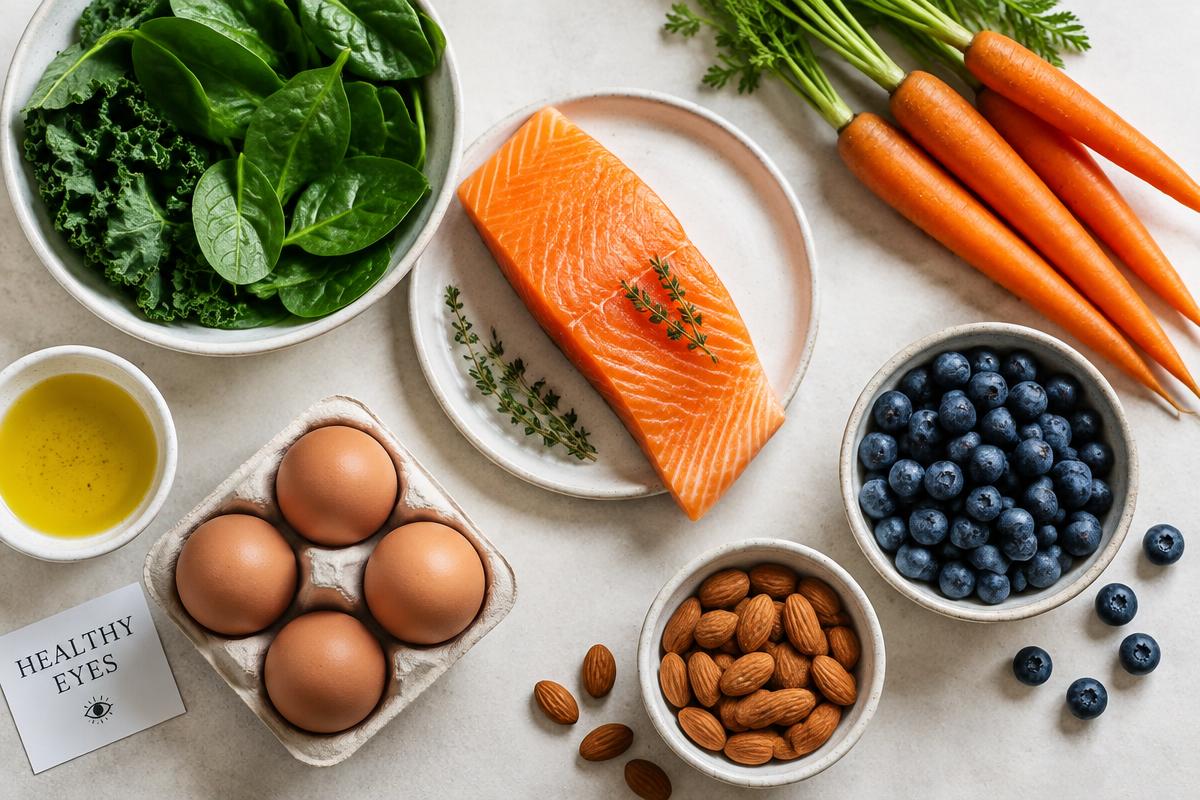
Nutrition won't replace your prescription, but the evidence that diet influences long-term eye health, particularly macular degeneration and dry eye, is genuinely strong.
Lutein and zeaxanthin
These pigments concentrate in the macula and filter damaging blue light. Kale, spinach, collard greens, and egg yolks are the richest sources. Aim for leafy greens most days.
Omega-3 fatty acids
EPA and DHA support the oil layer of the tear film and reduce inflammation. Salmon, sardines, and mackerel two to three times a week make a measurable difference for many dry eye patients.
Vitamin A
Essential for low-light vision and a healthy corneal surface. Carrots, sweet potatoes, and dark leafy greens cover it; true deficiency is rare in the US.
Vitamin C, vitamin E, and zinc
Citrus, bell peppers, almonds, sunflower seeds, and legumes. These antioxidants are the backbone of the AREDS2 formula shown to slow progression of intermediate macular degeneration.
About supplements
AREDS2 is the one formulation with strong clinical evidence, and it's specifically for people with intermediate or advanced macular degeneration, not a general preventive. Beta-carotene supplements are not recommended for smokers. Ask us before starting anything.
The takeaway
A colorful plate with greens and fatty fish does most of the work. If you have a family history of macular degeneration, bring it up at your exam and we'll discuss whether a supplement makes sense for you.
Time for an eye exam?
Bream Optometry serves Goleta & Santa Barbara — appointments available as soon as this week. Membership not required.